Important Temples of Murugan / Skanda - A Complete Guide
From the hidden Kulanthai Velappar shrine in Poombarai to the six padai veedu and powerful Subramanya kshetras across India and abroad, this guide maps where Murugan's grace is most active, how each temple works, and which shrines align with specific planetary and karmic remedies.
A
Astrogya TeamMuruganSkandaKarthikeya
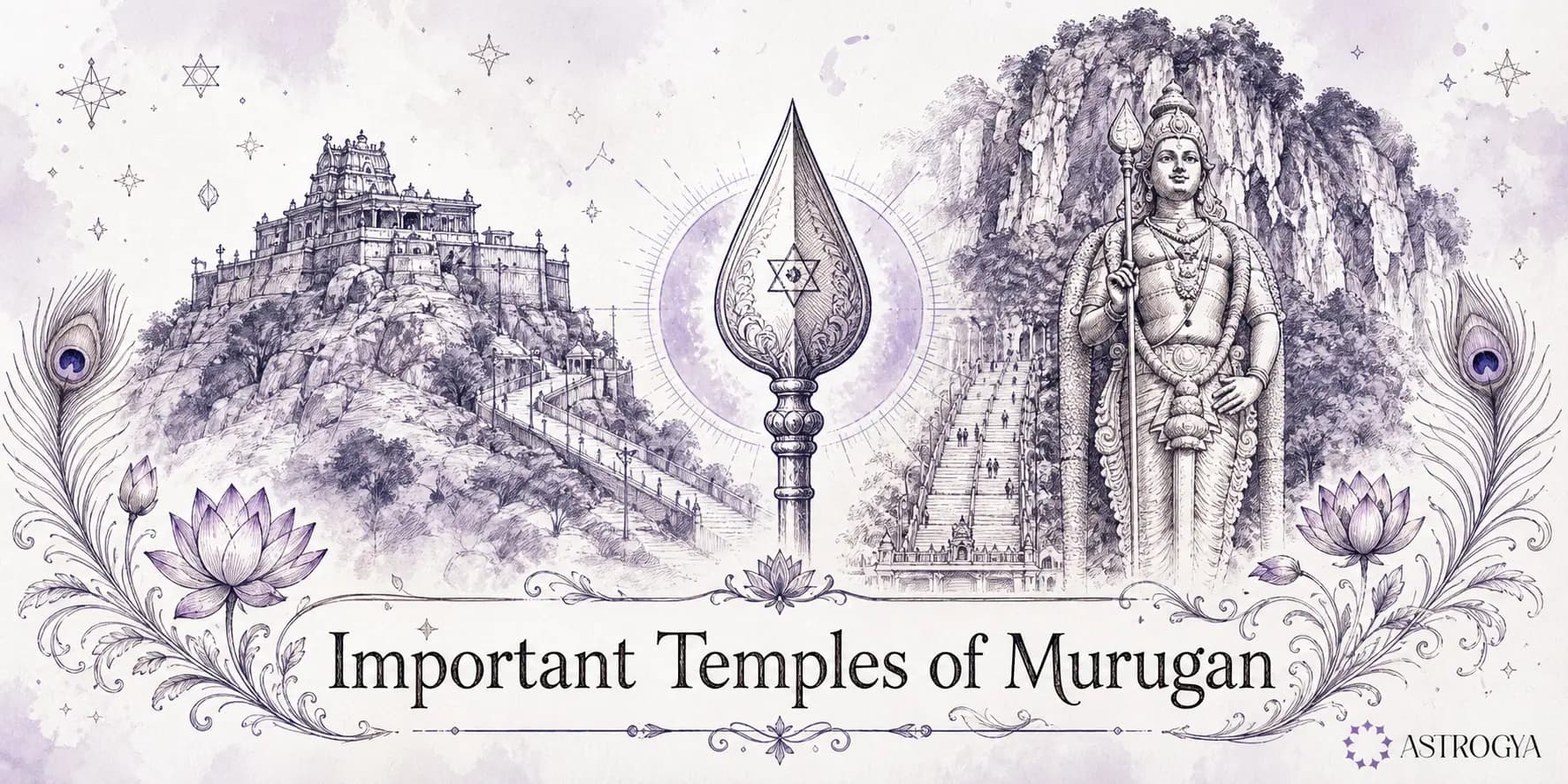
Lord Murugan - known as Skanda, Karthikeya, Subrahmanya, and Shanmukha - is one of the oldest and most continuously worshipped deities in the world, with temples spanning from the Himalayas to the Tamil diaspora in four continents. This guide covers every category of his sacred abodes: the unique Poombarai shrine, the six Padai Veedu, significant temples across South India, Karthikeya temples in North India, worldwide shrines, and the critical connections to Vedic astrology and the Siddhar tradition. For a deeper understanding of his mythology and iconography, read the complete guide to Lord Murugan and the 16 divine forms of Lord Murugan.
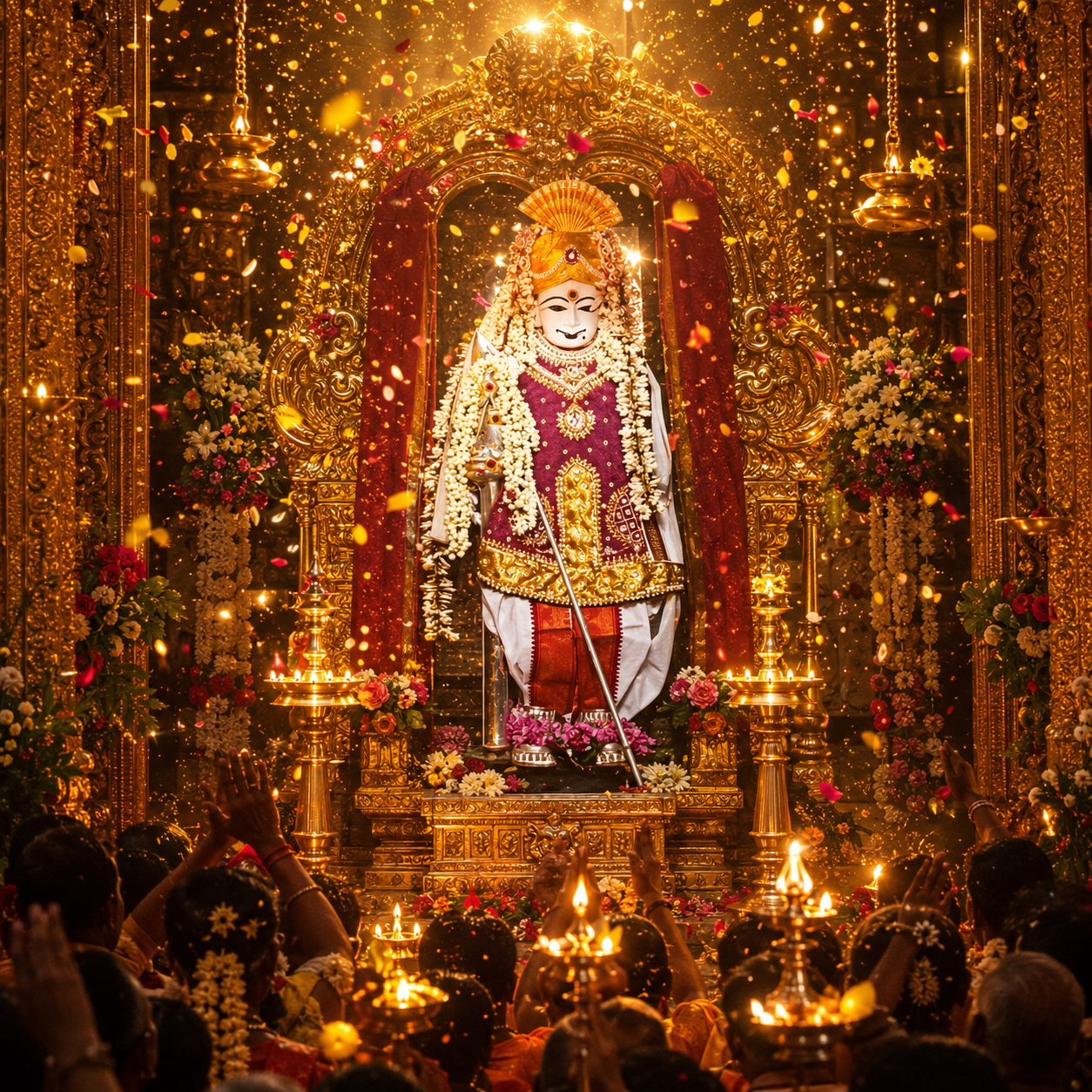
Kulanthai Velappar Balamurugan Temple, Poombarai, Kodaikanal
Hidden in the Palani Hills at over 2,000 meters, Poombarai is one of only two temples in India where Murugan's idol is made entirely of Navapashanam - the other being Palani. Both were crafted by Siddhar Bogar, yet here Murugan is worshipped as a child (Kulanthai/Bala form) and faces west - a directional rarity that sets this temple apart from every other Murugan shrine in existence.
Field | Details |
|---|---|
Temple Name | Arulmigu Kulanthai Velappar Balamurugan Temple |
Location | Poombarai Village, ~18 km from Kodaikanal, Dindigul District |
Estimated Origin | Sangam era; Navapashanam idol by Siddhar Bogar (medieval period) |
Form Worshipped | Kulanthai Velappar - child form of Murugan, facing west |
Speciality | One of only two Navapashanam idols in India. Arunagirinathar composed Thiruppugazh here after Murugan appeared as a child to protect him. The chariot (ther) is pulled from both front and back - the Iru Vada Ther tradition. |
Main Purpose | Healing, wish fulfillment; spiritually accessible only to those called by Murugan |
Key Festivals | Thaipusam (flag hoisting on Magam star, day after Palani Thaipusam); 9-day float festival; on the 10th day, Murugan is symbolically sent to Palani |
The Six Padai Veedu - Sacred Battle Stations of Murugan
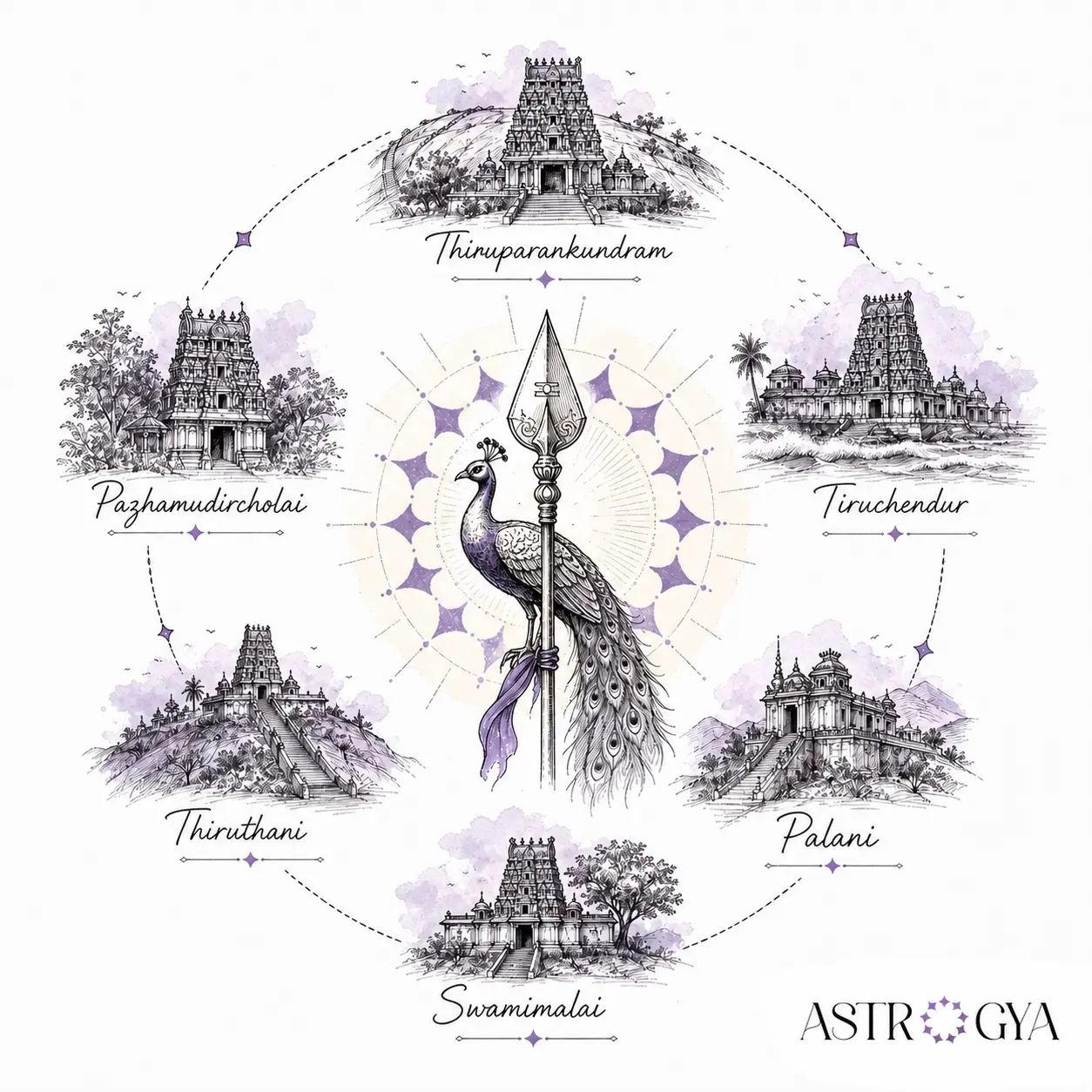
The Arupadai Veedu (Six Battle Camps) are the spiritual axis of all Murugan worship, first documented in the Sangam-era text Thirumurugatrupadai and glorified by Saint Arunagirinathar in Thiruppugazh. Each abode marks a specific divine act - battle, marriage, renunciation, wisdom, peace, or wholeness - and together they are considered the complete map of Murugan's life and grace. To plan your pilgrimage around auspicious Tamil calendar dates, refer to the Tamil Calendar 2026 and the Tamil Panchang.
Temple | Location | Origin | Form Worshipped | Speciality | Main Purpose | Key Festivals |
|---|---|---|---|---|---|---|
Thiruparankundram (1st Abode) | 8 km from Madurai | 6th century CE; Pandya rock-cut architecture | Subramaniyan - victorious warrior, with Deivanai | Only Padai Veedu where abhishekam is performed to the Vel, not the idol. Rock-cut cave temple with shrines to Shiva, Vishnu, and Durga in a single complex. | Marriage blessings; post-battle victory; Murugan's divine wedding site | Panguni Uthiram; Skanda Sashti; Thai Poosam; annual Brahmostavam (14 days) |
Tiruchendur (2nd Abode) | Thoothukudi District, Bay of Bengal shore | 7th–11th century CE; Pandya and Chola expansion | Senthilnathan - the Red One, victorious six-faced warrior | Only seashore Murugan temple; the ocean itself is the sacred offering. Grand Soorasamharam reenactment on Skanda Sashti draws hundreds of thousands. | Victory over enemies; protection for seafarers and fishermen | Skanda Sashti / Soorasamharam; Thai Poosam; two annual Brahmotsavams |
Palani (3rd Abode) | Dindigul District, 100 km from Coimbatore | Sangam era; Navapashanam idol by Siddhar Bogar | Dhandayuthapani - barefoot ascetic with staff, no consorts | The idol is Navapashanam - nine alchemically combined toxic herbs. Abhishekam liquids acquire medicinal properties. | Disease healing; debt and obstacle removal; the most sought-after miracle temple | Thai Poosam; Panguni Uthiram; Vaikasi Visakam; Aadi Krithigai; Soora Samharam |
Swamimalai (4th Abode) | 5 km from Kumbakonam, Thanjavur District | Sangam period; Parantaka Chola I expansion; rebuilt after 1740 war | Swaminathaswamy - young Murugan as guru preaching Om to Shiva | 60 steps representing the 60 Tamil years. Murugan imprisoned Brahma and preached the Pranava Mantra to Shiva himself, earning the name Swaminathan - Teacher of the Father. | Academic excellence; seeking wisdom; spiritual initiation | Skanda Sashti; Vaikasi Visakam; Thai Poosam; Panguni Uthiram |
Thiruthani (5th Abode) | Tiruvallur District, 75 km from Chennai | Ancient; expanded medieval period; 700 ft elevation | Subramaniya Swamy at peace - with both Valli and Deivanai | 365 steps - one for each day of the year. Post-battle rest site. Murugan's marriage to Valli is commemorated here. Lord Rama is believed to have worshipped here after the Lanka war. | Mental peace; grief removal; blessings for Valli-type (love) marriages | Aadi Krittikai; Brahmotsavam (Masi); Valli Kalyanam on 8th day; Skanda Sashti; New Year 365-step festival |
Pazhamudircholai (6th Abode) | ~20 km from Madurai, Palani Hills | Sangam era; among the oldest Murugan sites in literature | Kurinji Nilam Kizhavan - Lord of the forest hill, with both Valli and Deivanai together | Only Padai Veedu where both consorts appear simultaneously. Site of the Avvaiyar legend - Murugan disguised as an old man tested the poetess with the "hot or cold fruit" riddle. Surrounded by waterfalls and forest. | Family harmony; marital unity; forest-shrine energy | Thai Poosam; Skanda Sashti; Vaikasi Visakam; Panguni Uthiram |
Other Important Murugan Temples in Tamil Nadu
Beyond the six abodes, Tamil Nadu holds scores of ancient Murugan temples that carry specific powers and traditions. Several of these have been considered unofficial seventh abodes by different lineages of devotees, and many were sung by Arunagirinathar in the Thiruppugazh. Each temple listed here draws pilgrims for reasons distinct from the main six - a cigar offering, a child adoption ritual, a north-facing idol - traditions that have survived intact for over a millennium.
Temple | Location | Origin | Form Worshipped | Speciality | Main Purpose | Key Festivals |
|---|---|---|---|---|---|---|
Marudhamalai Murugan Temple | 15 km west of Coimbatore, Western Ghats | 12th century CE; Sangam-era oral tradition | Dhandayuthapani - same ascetic form as Palani, set in a medicinal herb hill | Considered the de facto 7th Padai Veedu by Coimbatore devotees. The hill grows Marudha herbs used in Siddha medicine. 837 steps. | Healing chronic illness; seeking Murugan's grace in the forest | Thai Poosam; Thiru Karthigai |
Sikkal Singaravelan Temple | Sikkal, Nagapattinam District | Chola period; ancient Sangam mention | Singaravelan - beautifully adorned, smiling Murugan | One of 11 temples said to form the Tamil Om shape on the map. The Soora Samharam here is considered among the most powerful in Tamil Nadu. Often cited as the 7th Padai Veedu by Nagapattinam devotees. | Victory over enemies; fulfillment of vows | Skanda Sashti / Soora Samharam (the primary festival) |
Ettukudi Murugan Temple | Nagapattinam District | Ancient; Chola period | Shanmukha - six-faced, seated on peacock | The idol is said to appear differently to each devotee - as a child, youth, or elder based on their inner state. Nine warrior companions of Murugan (Nava Thalapathis) are installed. Blood-vein-like markings on the idol. | Removal of fear in children; courage; protection | Sashti; Kethara Gowri Viratham |
Vayalur Murugan Temple | Kumaravayalur, 9 km from Tiruchirappalli | 9th century CE; Chola dynasty | Subramaniya Swamy in paddy-field setting | The only major temple in India where children with health or behavioral problems are symbolically "adopted" by the temple for a prescribed period. Associated with devotee-saint Kirupanandha Variyar. | Children's health, intelligence, protection | Vaikasi Visakam; Thai Poosam; Kanda Sashti; Panguni Uthiram |
Kundrathur Murugan Temple | Kundrathur, Chennai suburbs, Kancheepuram Dist. | 10th century CE; Kulothunga Chola II (12th c.) expansion | Subramaniya Swamy facing north - a very rare orientation | The only Murugan temple in Tamil Nadu where the deity faces north. Murugan is said to have rested here en route from Tiruchendur to Thiruthani, making this a transit point of divine pilgrimage. | Blessings for northward journeys; marital and life wishes | Monthly Karthigai stars; Skanda Sashti; Thai Poosam |
Viralimalai Murugan Temple | Viralimalai, Pudukkottai Dist., 25 km from Trichy | ~1,500 years old; Vijayanagara-era inscriptions (1422–1446 CE) | Shanmuganathar - six-faced, 10-foot idol on peacock | Arunagirinathar received Ashta Maha Siddhi (8 divine powers) here. The only Murugan temple where a cigar (Suruttu) is offered as sacred naivedyam - a ritual tradition with no parallel. | Destruction of ego (Aanavam); wisdom; unique vow fulfillment | Skanda Sashti; Thai Poosam |
Important Murugan Temples in Kerala, Karnataka, and Andhra Pradesh
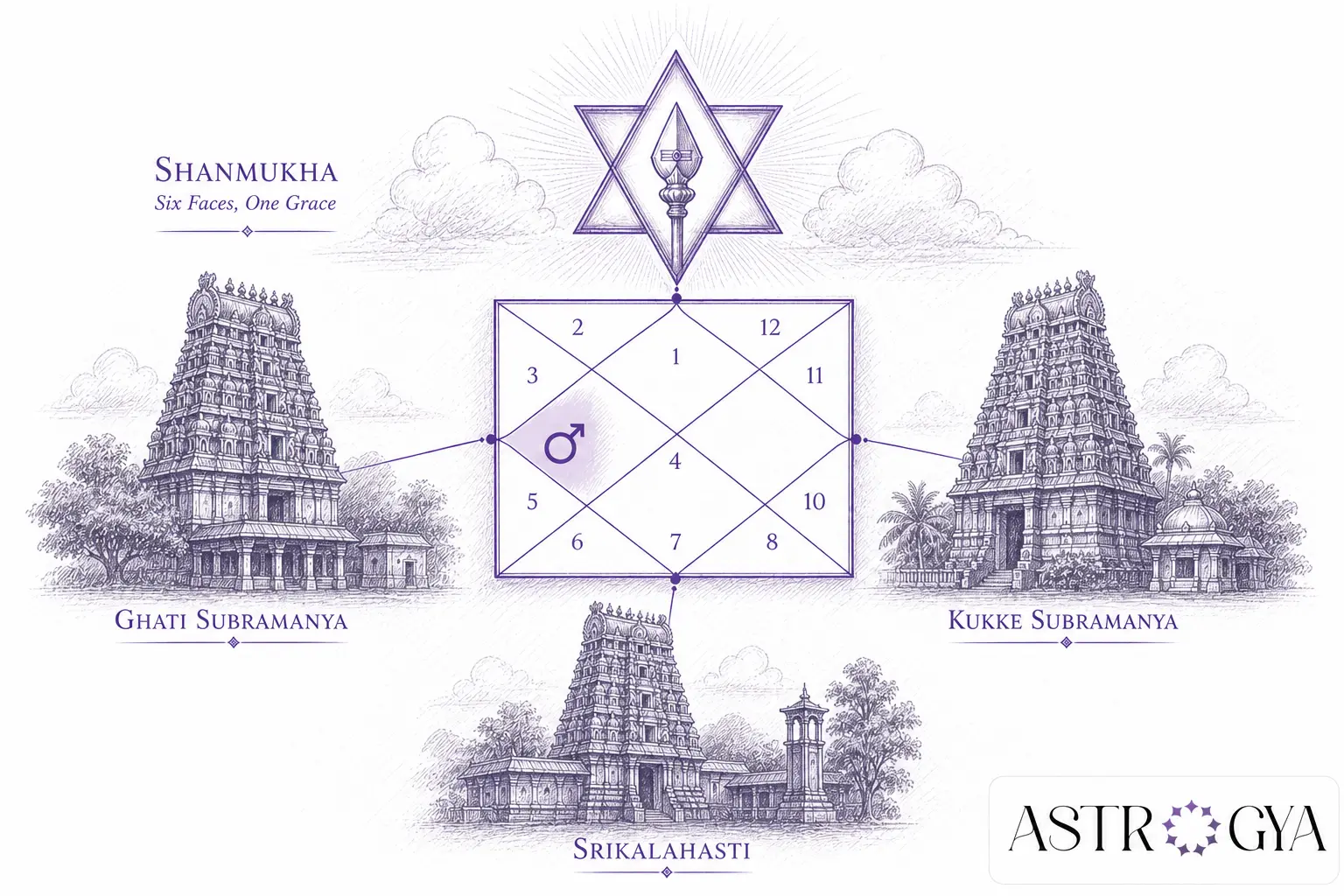
Murugan worship in the southern states beyond Tamil Nadu carries distinct regional identities - Kerala emphasizes the serpent form and Naga-worship, Karnataka focuses on Sarpa Dosha and Kuja Dosha remedies, and Andhra Pradesh integrates the tradition within Rahu-Ketu pilgrimage circuits. These temples are where astrology and temple worship converge most directly; check your horoscope for Mars and Rahu-Ketu placements before planning these pilgrimages.
Temple | Location | Origin | Form Worshipped | Speciality | Main Purpose | Key Festivals |
|---|---|---|---|---|---|---|
Haripad Sree Subrahmanya Swamy Temple | Haripad, Alappuzha Dist., Kerala | Over 3,500 years old; associated with Sage Parashurama | Velayudha Swami - four-armed Murugan; largest four-armed idol in Kerala | Known as Dakshina Palani of Kerala. The idol was discovered in the backwaters, said to have been placed by Parashurama. Features Kerala's longest golden Kodimaram (flagpost) and a 5-acre temple pond. | Prosperity, health, overall wellbeing | Thaipooyam with Kavadiyattam; Avani Utsavam |
Sree Peralassery Subramanya Temple | Peralassery, Kannur Dist., Kerala | Tretha Yuga origins; associated with Lord Rama | Sarpa Murti - Subrahmanya in serpent form | Murugan worshipped entirely as a serpent deity. Uniquely, the main offering here is hen's eggs. Kerala's largest stepwell (Vazhi Kulam) is within the complex. | Sarpa Dosha removal; snake-related afflictions; fertility | Annual Kodiyettam (December); Sashti |
Kukke Subramanya Temple | Dakshina Kannada, Karnataka, on banks of River Kumaradhara | Ancient; Western Ghats forest setting; Murugan sheltered Vasuki (Naga king) in Biladwara caves here | Sarpa Subrahmanya - Lord of All Serpents; protector of the Naga world | The most powerful temple in India for Sarpa Samskara rituals. Revered as one of seven Swayam Vyakta Kshetras of Murugan. Over 600 years of verified recorded history. | Sarpa Dosha; skin disease; progeny blessings; marriage obstacles | Sashti; Nagaradhane; Nagara Panchami; Deepavali; Ugadi |
Ghati Subramanya Temple | ~60 km from Bengaluru, near Doddaballapura, Karnataka | 600+ years recorded; first built by the Ghorpade dynasty | Sarpa Murti - Naga Kshetra form of Subrahmanya | One of seven Swayam Vyakta Kshetras. Specifically sought for Kuja (Mars) Dosha, Rahu Dosha, Kala Sarpa Dosha, and skin diseases. Tuesdays draw thousands seeking Mars-remedy pujas. | Kuja Dosha; Rahu-Ketu affliction; marital problems; debt | Sukla Shashti (Pushya month) Temple Car Festival; every Tuesday |
Subramanya Swamy Temple, Srikalahasti | Srikalahasti, Tirupati Dist., Andhra Pradesh | Ancient; within the Pancha Bhuta Stala circuit | Subrahmanya Swamy in Naga-deity form within the Rahu-Ketu kshetra | Part of the most significant Rahu-Ketu remedy pilgrimage in South India. Rahu Ketu puja here is said to neutralize major planetary afflictions at their root. | Rahu-Ketu Dosha; Kuja Dosha; planetary remedy | Skanda Sashti; Karthika festivals |
Karthikeya / Skanda Temples in North India
North India has worshipped Kartikeya as the warrior son of Shiva since the Gupta period (4th–6th century CE), with inscriptions and coins showing his widespread veneration. These temples carry a distinctly different energy from the Tamil abodes - more austere, Himalayan in character, and deeply integrated with Shaiva pilgrimage.
Temple | Location | Origin | Form Worshipped | Speciality | Main Purpose | Key Festivals |
|---|---|---|---|---|---|---|
Kartik Swami Temple, Kronch Parvat | Kanakchauri, Rudraprayag Dist., Uttarakhand; ~3,050 m altitude | Ancient pre-medieval origins; revered by 360+ surrounding Garhwal villages | Kartik Swami - Himalayan warrior form | The only Kartikeya temple in the entire Himalayan range. 3–4 km trek from Kanakchauri. 360-degree panorama of snow peaks. The Garhwal communities have maintained continuous worship here for centuries. | Prayers for children; courage; Uttarakhand's oldest Kartikeya shrine | Kartik Poornima (November); Navratri |
Kartikeya Temple, Pehowa | Pehowa, Kurukshetra Dist., Haryana | Among the oldest Kartikeya temples in North India; ancient Kurukshetra pilgrimage circuit | Kartikeya in Mahabharata-era warrior form | Houses perpetually burning lamps maintained without interruption since ancient times. Located within the Kurukshetra pilgrimage circuit sacred to ancestral rites. | Victory; ancestral rites (Pitru Tarpan); courage | Kartik Poornima; pilgrimage season |
Uttara Swami Malai Temple (Malai Mandir) | Sector 7, R.K. Puram, New Delhi | Construction 1965; consecrated 1973 | Swaminathaswamy - Teacher of Shiva; mirrors Swamimalai | The premier Murugan temple of North India; built as a replica of the Swamimalai temple. Serves Tamil, Telugu, Kannada, and Malayali communities of Delhi. The spiritual anchor for the South Indian diaspora in the capital. | Academic excellence; Tamil diaspora worship in North India | Skanda Sashti; Thai Poosam; Vaikasi Visakam; Karthigai Deepam |
Important Murugan Temples Worldwide
The Tamil diaspora carried Murugan worship across the Indian Ocean and beyond, and today some of the largest Hindu pilgrimages in the world take place at Murugan temples outside India. From a limestone cave in Malaysia to a war-torn northern Sri Lanka to a 130-acre campus being built in North Carolina, the reach of this tradition is extraordinary.
Temple | Country / Location | Founded | Form Worshipped | Speciality | Main Purpose | Key Festivals |
|---|---|---|---|---|---|---|
Batu Caves - Sri Subramaniya Swamy Temple | Gombak, Selangor, Malaysia | 1890 by K. Thamboosamy Pillai; first Thaipusam: 1892 | Lord Murugan with a 42.7-meter (140 ft) golden statue - second tallest in the world | The largest Hindu pilgrimage site in Malaysia. 272 steps to the cave sanctum. Over 1.5 million pilgrims attend Thaipusam - one of the largest religious gatherings on earth. | Vow fulfillment (Kavadi); Tamil diaspora spiritual identity | Thaipusam (Jan–Feb): 1.5M+ pilgrims annually |
Nallur Kandaswamy Kovil | Nallur, Jaffna, Sri Lanka | 948 CE (10th century) | Vel Murugan - the divine Vel is the primary deity; no anthropomorphic idol in the main sanctum | The most sacred Hindu temple in Sri Lanka; the cultural heartbeat of Tamil Jaffna. Strict dress code enforced. The 25-day Nallur festival is one of the most elaborate Hindu festivals in the world. | Sri Lankan Tamil spiritual identity; protection; wish fulfillment | Nallur Festival (August, 25 days); Skanda Sashti |
Sri Thendayuthapani Temple | 15 Tank Road, Singapore | 1859 | Thendayuthapani - the Victor with the Vel | Singapore's oldest Hindu temple and a declared National Monument. Built by the Chettiar community. The Thaipusam procession is one of Singapore's most iconic annual events. | Tamil community cohesion; devotional worship | Thaipusam procession; Vaikasi Visakam |
Sivananda Subramanyam Temple, Val-Morin | Laurentian Mountains, Quebec, Canada | Founded 1963 by Swami Vishnu Devananda | Subrahmanyam in classical South Indian form | The largest Hindu gathering in North America - annual two-week summer Kavadi festival draws devotees from across Canada, USA, and Europe. | Hindu diaspora devotion; yoga retreats | Annual Kavadi Festival (two weeks, summer) |
Carolina Murugan Temple (CMT) | Moncure, Chatham County, North Carolina, USA | Under construction (as of 2026) | Bhagwan Murugan - planned 155-foot statue (190 ft total from ground), taller than the Statue of Liberty | Will be the world's tallest Murugan statue and one of the tallest religious monuments in the Western Hemisphere. 130-acre campus on the Deep River. | Tamil Hindu diaspora cultural monument in the USA | To be announced upon completion |
Ganga Talao / Grand Bassin | Savanne District, Mauritius; volcanic crater lake at 550 m | Sacred from 1887; formally developed in 20th century | Murugan and Shiva temples within the sacred crater lake complex | Most sacred Hindu site in Mauritius. The crater lake water is venerated as equivalent to the Ganges. Annual Maha Shivaratri draws nearly 500,000 devotees - the largest religious gathering in Mauritius's history. | Pitru worship; Tamil Mauritian spiritual identity | Maha Shivaratri (Mar–Apr); Thaipusam |
Murugan Worship and Vedic Astrology
Lord Murugan is the presiding deity of planet Mars (Kuja/Mangala) in Vedic astrology - a connection that transforms temple visits into planetary remedies with precise astrological intent. Mars rules Aries (Mesha) and Scorpio (Vrischika), and a weak or afflicted Mars in a birth chart is treated directly through Murugan worship; refer to your horoscope to identify your Mars placement before choosing a remedy temple.
The Shashti tithi (6th lunar day) is astrologically designated as Subrahmanya's day, and monthly Subrahmanya Shashti observances are prescribed by Jyotisha shastras for those with Kuja Dosha, Rahu-Ketu Dosha, Sarpa Dosha, or Kala Sarpa Dosha. Track these dates using the Tamil Panchang. Each of the following conditions has a specific temple remedy in the Murugan circuit:
Kuja (Mars) Dosha (Mars in 2nd, 4th, 7th, 8th, or 12th house): Ghati Subramanya temple (Karnataka) is the foremost remedy site; Kukke Subramanya and Srikalahasti are also primary pilgrimage points. Tuesday visits, Subrahmanya Abhishekam, and chanting the Angaraka Ashtottara are prescribed alongside.
Sarpa / Naga Dosha: Kukke Subramanya's Sarpa Samskara ritual is the most authoritative remedy in the entire tradition. Peralassery temple (Kerala) is equally significant for Naga worship.
Kala Sarpa Dosha: Ghati Subramanya and Srikalahasti are primary pilgrimage destinations; Kukke is visited for the combined Naga-Sarpa Dosha complex.
Rahu-Ketu afflictions: Srikalahasti (Andhra Pradesh) is the designated Rahu-Ketu kshetra; Subramanya worship here specifically addresses this planetary axis.
General Mars strengthening (for Mesha and Vrischika lagna or Rashi): Monthly Sashti puja at any of the six Padai Veedu; Palani is most frequently sought for wish fulfillment alongside planetary remedy.
The six Padai Veedu themselves are often mapped to the six faces of Shanmukha, each face presiding over a specific dimension of human experience - from material victory (Tiruchendur) to spiritual wisdom (Swamimalai). For devotees seeking a complementary tool for protection and Mars energy channeling, the 6 Mukhi Rudraksha is directly ruled by Kartikeya and worn alongside Murugan temple worship for sustained planetary benefit. Those with a Life Path Number 6 in numerology will find an especially strong resonance with Murugan's energy - read more on Life Path Number 6.
Murugan and the Siddhar Tradition
No understanding of Murugan temples is complete without the Siddhar tradition. The 18 Tamil Siddhars - a lineage of enlightened masters who practiced alchemy, Siddha medicine, yoga, and Jyotisha - considered Murugan their presiding deity and protector. Their tradition and his temples are inseparable.
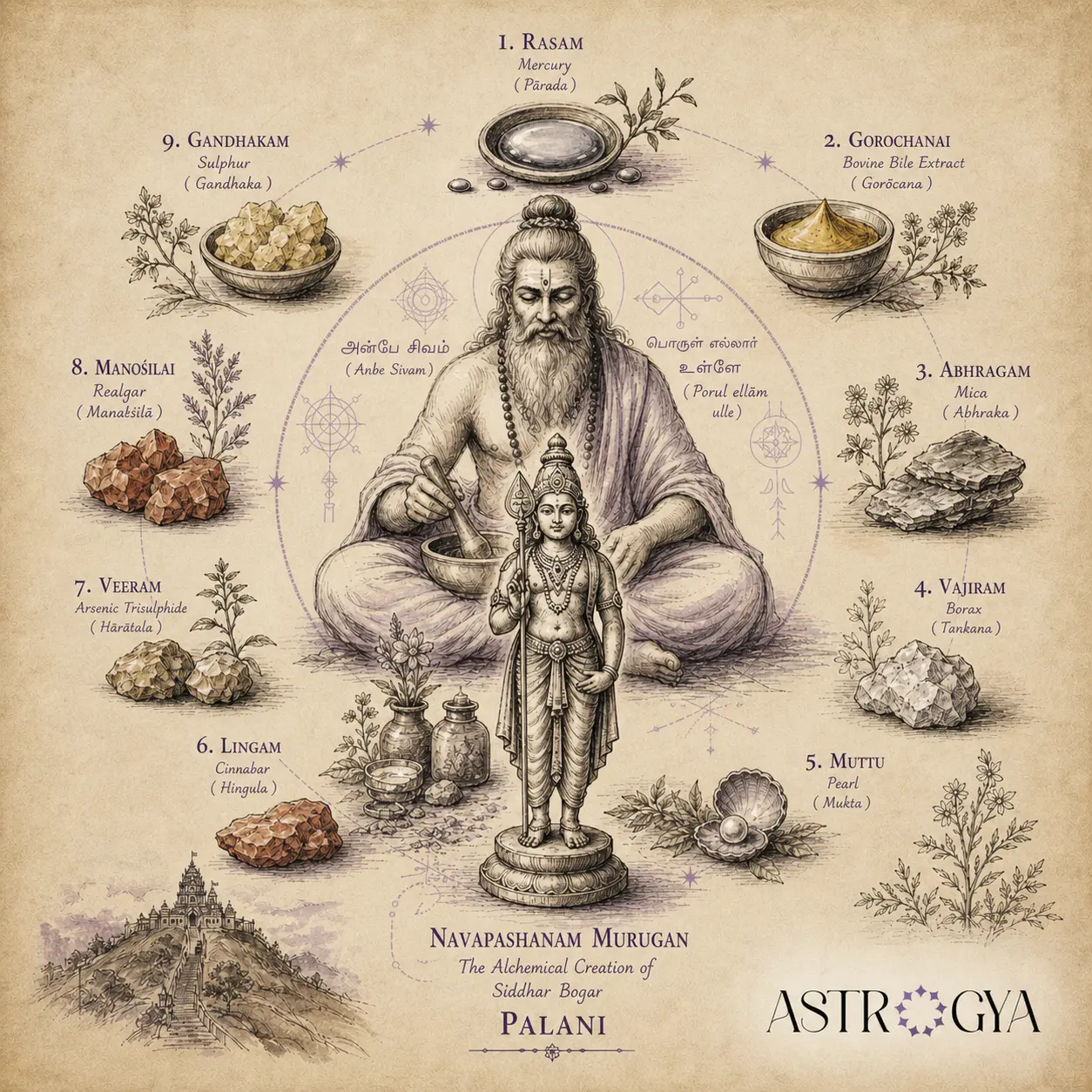
Siddhar Bogar (Boganathar), disciple of Kalangi Nathar and one of the 18 Siddhars, is the direct architect of the two most alchemically significant Murugan idols in existence. For the Palani idol, he used nine toxic substances - Veeram, Pooram, Rasam, Jathilingam, Kandagam, Gauri Pasanam, Vellai Pasanam, Mridharsingh, and Silasat - and combined them with 4,448 medicinal herbs into the Navapashanam mixture. The result is a substance that, when touched by abhishekam liquids, imparts medicinal properties to the prasad received by pilgrims. Bogar's own Jeeva Samadhi is located at the foot of Palani hill, and his presence is considered alive within the temple complex to this day.
The Siddhar tradition holds that Agastya (Agathiyar), the foremost of the 18 Siddhars, composed foundational Tamil grammar, Siddha medicine texts, and astrology treatises under Murugan's grace, having received initiation directly from Shiva and Murugan. Thirumular, another of the 18, composed the Thirumantiram - the foundational text of Tamil Shaiva Siddhanta - at Chidambaram while holding Murugan as the inner guru. The Siddhar tradition's five-fold path of medicine (Vaithiyam), alchemy (Vatham), astrology (Jothidam), tantra (Manthirigam), and yoga (Yogam) is considered to flow directly from Skanda's wisdom. For the serious devotee or astrologer, the Siddhar connection answers a frequently asked question: why are Murugan's abhishekam prasad and the panchamritham from Palani considered medicinal? Because the idol itself was designed as medicine - not metaphorically, but literally, by a master of Siddha pharmacology who received Murugan's own instruction in a dream. Explore the full range of Murugan's divine forms to understand how each Siddhar lineage relates to a specific manifestation of Skanda's grace.
Conclusion
Astrogya (astrogya.com) turns your devotion to Murugan into living GYAN (astrogya.com/gyan): personalized, chart-based wisdom for your daily life. Powered by your exact birth details, GYAN explains how Mars, Rahu–Ketu, and key yogas influence you now, giving clear, practical guidance instead of generic horoscope lines.