Devoted to the Eternal Lord
Lord Murugan
Skanda
·
Subramaniyan
·
Karthikeya
·
Bala Murugan
·
Vadi Velan
·
Shanmukha
·
Guha
·
Senthil
01
About Lord Murugan
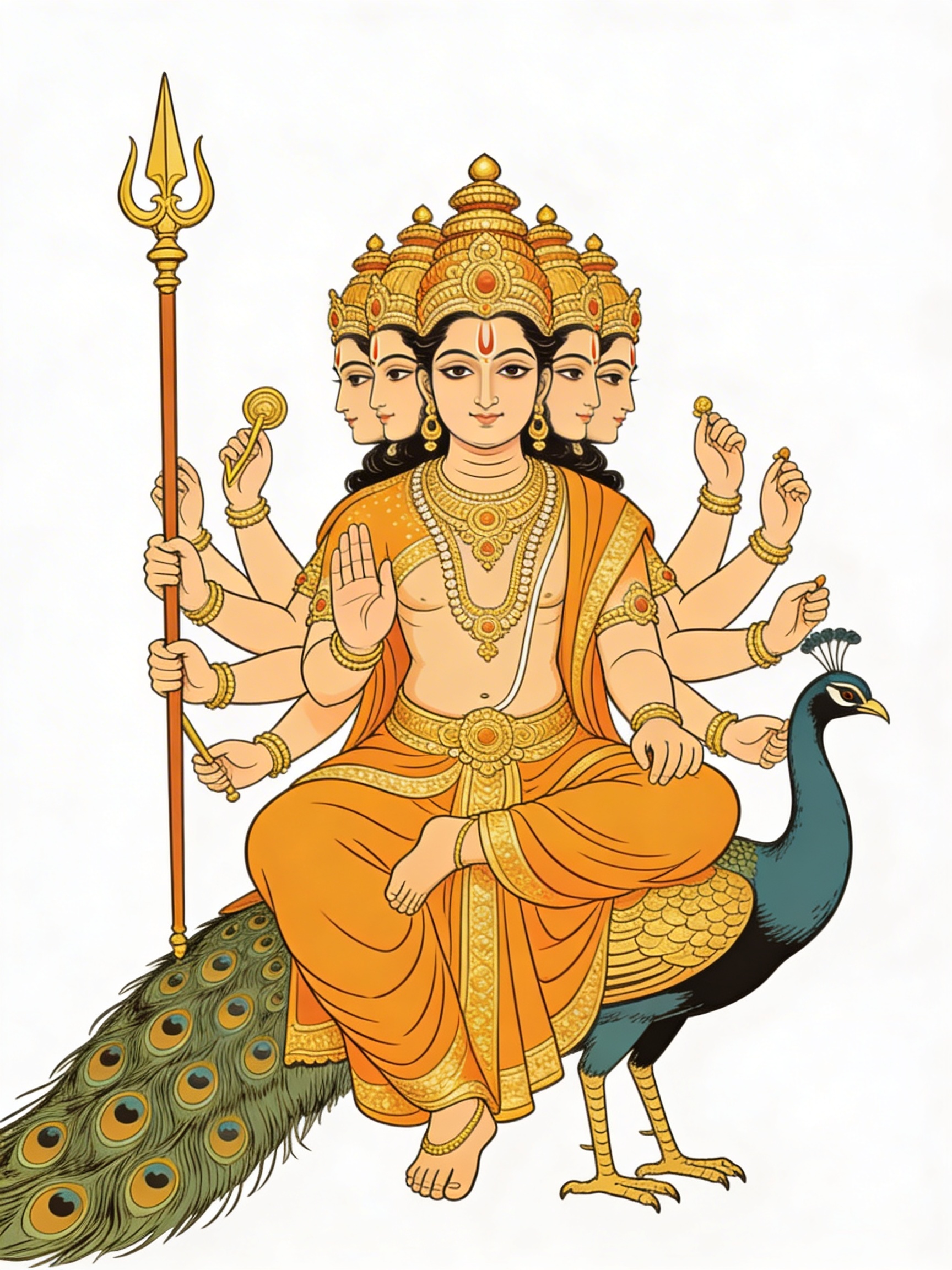
Lord Murugan known across millennia as Skanda, Kartikeya, Subramanya, Shanmukha, Guha, and Vadi Velan is not merely a deity among deities. He is the eternal, ever-young Tamil God of wisdom, war, and grace; the living heartbeat of a civilisation that has worshipped him without interruption for thousands of years.
His name Muruku in Tamil means beauty and youthfulness and every form he has taken across history, every scripture written in his name, and every temple built on his hills reflects exactly that.
Born of Shiva's Fire
Lord Murugan was not born in the ordinary way. When the demon Surapadman's terror became unbearable across the three worlds, the gods sought Lord Shiva's help. From Shiva's third eye the seat of supreme wisdom six divine sparks of fire were released.
These sparks travelled through Agni and Vayu and finally rested on the sacred Saravana lake nestled in the Himalayas. From the lake's lotus flowers, six radiant infants were born, each nurtured by one of the six Krittika star-mothers. When Parvati embraced them all at once, the six merged into one child with six faces and twelve arms Shanmukha, the six-faced one. This child was Lord Murugan and from that moment, the cosmos had its commander.
Murugan Across Historical Time
Long before the great Puranas were written, Murugan was already being worshipped. His presence across human history is unbroken each age revealing a new dimension of the same divine being.
| Era | Evidence and Form |
|---|---|
| Neolithic Age Pre-3rd century BCE |
Archaeological excavations at Adichanallur, Tirunelveli uncovered burial urns bearing the image of a rooster Murugan's emblem confirming that his worship predates recorded history. |
| Pre-4th century BCE | The Baudhayana Dharma Sutra, one of India's oldest texts, already names Skanda, Shanmukha, Vishaka, Mahasena, and Subrahmanya as distinct divine identities all the same luminous being. |
| Sangam Period 500 BCE – 300 CE |
Tolkappiyam, the earliest Tamil grammar, calls him Ceyon the Red One and places him as the presiding deity of Kurinji, the mountainous landscape. He is Seyon, Velayudhan, Kunrukkilavan Lord of the Hills. |
| Epic Period | In the Mahabharata and Ramayana, he appears as Kartikeya the commander of the divine armies, the son who fulfils the cosmos's deepest need for order over chaos. |
| Puranic Period | The Skanda Purana and Tamil Kanda Puranam give full shape to his biography his birth, the war against Surapadman, his six sacred abodes, his marriages, and his infinite grace. |
| Medieval Bhakti Era 8th – 15th century CE |
Saint Arunagirinathar composed the Thirupugazh 16,000 hymns of ecstatic praise after Murugan personally appeared and granted him grace. |
| The Global Present | Murugan's worship now spans Tamil Nadu, Sri Lanka, Malaysia, Singapore, South Africa, Mauritius, and beyond he is the most globally worshipped Tamil deity on earth. |
His Many Names, One Divine Being
Each name of Lord Murugan is not a label it is a doorway into a different aspect of the same infinite being.
| Name | Meaning |
|---|---|
| Murugan | Beauty and eternal youth; from the Tamil root Muruku |
| Skanda | He who leaps / he who flows; born from divine fire |
| Kartikeya | Son of the six Krittika star-mothers |
| Subramanya | The supremely gracious Brahmin; knower of Brahman |
| Shanmukha / Arumugan | The six-faced one seeing in all directions |
| Guha | The hidden one; the Lord who dwells in the cave of every heart |
| Vadi Velan | Wielder of the sharp Vel the spear of divine wisdom |
| Senthil | The radiant, the clever; most beloved name in Tamil Nadu |
| Saravana | Born of the Saravana lake; the pure one |
| Swaminatha | The Guru who taught even Lord Shiva the meaning of Om |
His 16 Divine Forms (Shodasha Roopam)
Murugan is not worshipped in a single fixed form. He reveals himself in 16 sacred manifestations the Shodasha Roopam each expressing a unique facet of his divine nature, and each associated with specific temples across South India.
From Bala Murugan (the innocent child) to Shanmukha (the six-faced cosmic commander), from Guhan (the indwelling Lord of every heart) to Tharakari (the destroyer of Taraka's ego) each form carries its own blessing and its own sannidhi. Worshipping Murugan in his different forms is said to invoke different dimensions of grace: wisdom, courage, healing, liberation, and love.
Bala Murugan
Shanmukha
Guhan
Shaktivel Murugan
Tharakari
Valli Devasena Sametha
Dandayudhapani
Swaminatha
Saravana
Vadi Velan
Devasenapati
Subrahmanya
Skanda
Kartikeya
Seyon (Ceyon)
Arumugan
02
The Vel Weapon of Wisdom
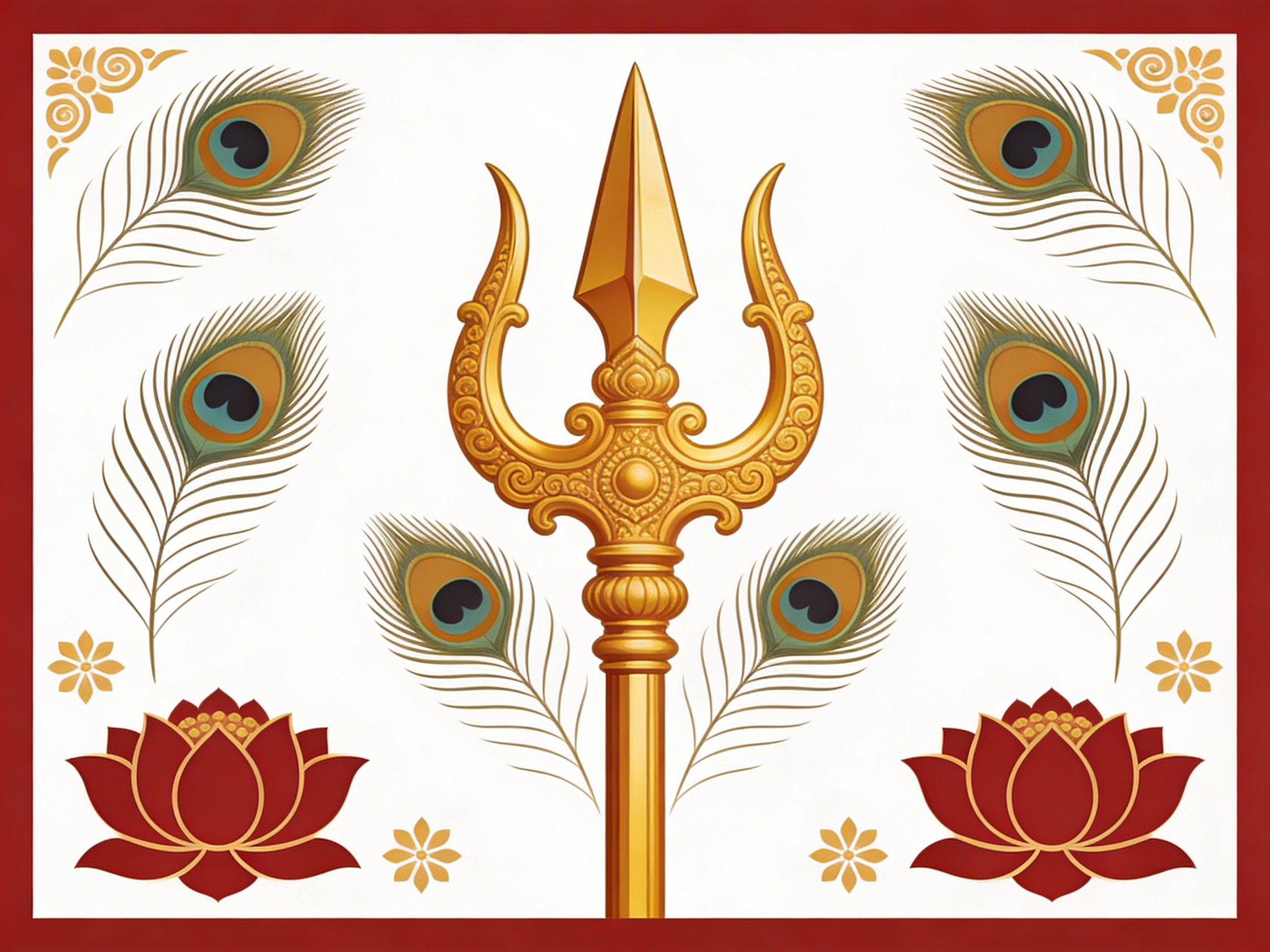
The Vel is not simply Murugan's weapon. It is the Goddess Parvati's own Shakti, given form and placed in her son's hands to restore order to a world consumed by darkness.
Before the great battle against Surapadman, Parvati handed the Vel to Murugan. In that act, she transferred her own divine power to him. The Vel is therefore inseparable from the Mother's grace.
During the final confrontation at Thiruchendur, Surapadman transformed himself into a massive tree spanning all three worlds. Murugan struck it once with the Vel, and it split in two. From the two halves, a rooster and a peacock emerged. Surapadman was not destroyed. He was transformed. The rooster became Murugan's battle flag. The peacock became his eternal vehicle.
This is the Vel's deepest teaching. It does not only destroy enemies in the outer world. It destroys avidya, the ignorance that sits at the root of every human problem.
The Vel pierces the ego, the karma it rides upon, and the false pride that goes before it. When devotees call out Vel Vel Muruga, they are not calling for a weapon. They are surrendering their own darkness to be redeemed.
03
Important Temples of Murugan
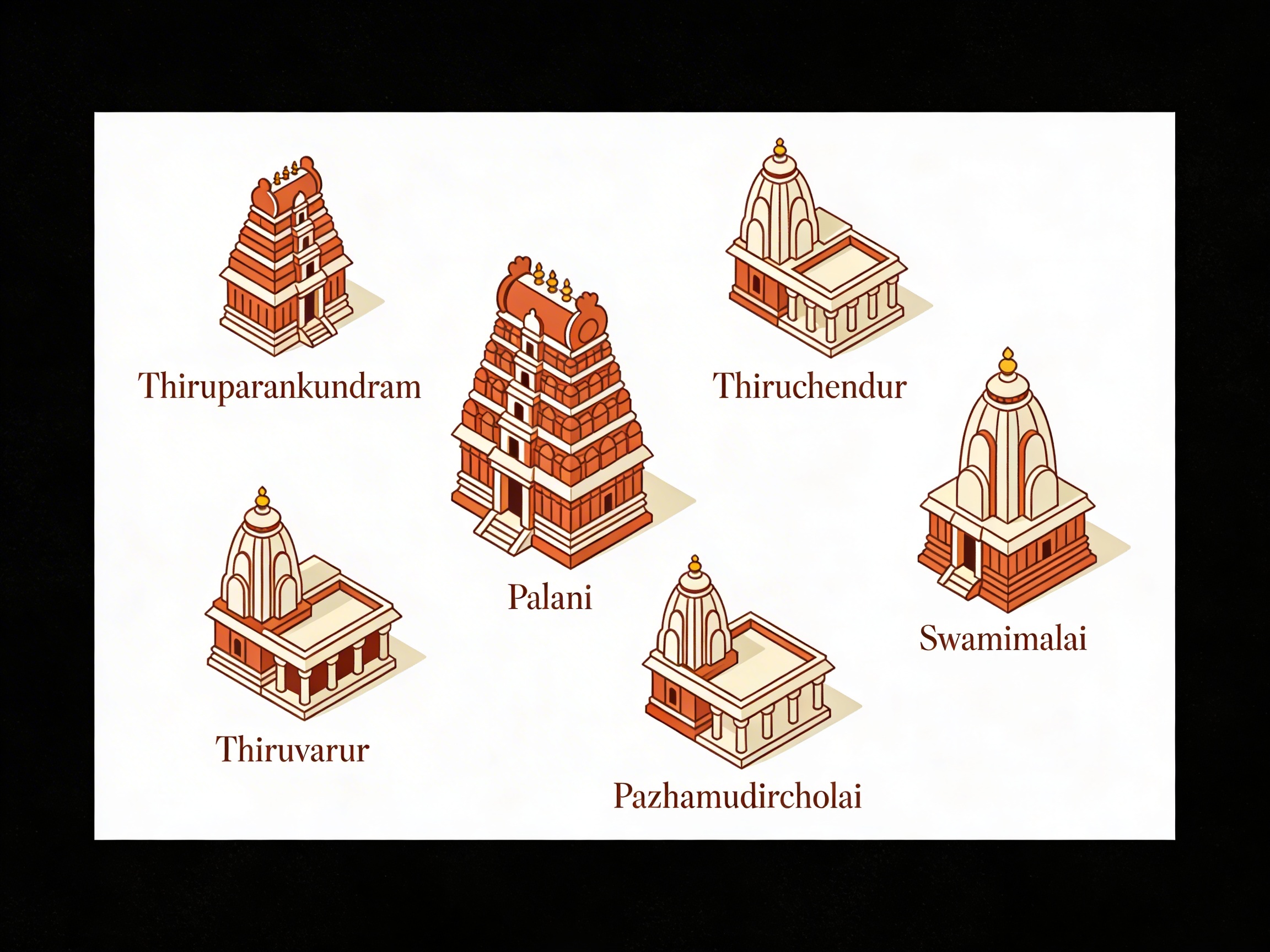
The six sacred abodes of Lord Murugan, the Arupadai Veedu, are not a temple tour. They are six chapters of his cosmic biography, each marking a turning point in his journey from warrior to guru, from conqueror to compassionate lord.
| Temple | Location | The Divine Event Here |
|---|---|---|
| Thiruparankundram | Madurai | Victory over Surapadman; Murugan weds Deivanai here after the war |
| Thiruchendur | Thoothukudi coast | The great sea battle; Surapadman's transformation at this shore |
| Palani (Dandayudhapani) | Dindigul Hills | Murugan renounces his possessions and becomes the hermit on the hill |
| Swamimalai | Near Kumbakonam | He becomes the Guru, teaching even his father Shiva the meaning of Pranava Om |
| Thiruttani | Tiruvallur | Post-battle peace and solace; Murugan rests after the great victory |
| Pazhamudircholai | Alagar Koil Hills | With both Valli and Deivanai at his sides, the complete and accessible Lord |
04
Important Dates for Lord Murugan 2026
All dates from April 14, 2026 through April 14, 2027. The three peak observances are marked.
| Date | Day | Observance | What It Marks |
|---|---|---|---|
| Apr 19, 2026 | Sunday | Masik Karthigai | Murugan's monthly birth nakshatra |
| Apr 21, 2026 | Tuesday | Skanda Sashti | Monthly fasting and worship |
| Apr 29, 2026 | Wednesday | Masik Karthigai | Murugan's monthly birth nakshatra |
| May 16, 2026 | Saturday | Masik Karthigai | Murugan's monthly birth nakshatra |
| May 20, 2026 | Wednesday | Adhika Skanda Sashti | Rare extra Sashti in the calendar |
| May 30, 2026 | Saturday | Vaikasi Visakam | Murugan's birthday the most auspicious day of the year |
| Jun 13, 2026 | Saturday | Masik Karthigai | Monthly nakshatra |
| Jun 19, 2026 | Friday | Skanda Sashti | Monthly fasting and worship |
| Jul 10, 2026 | Friday | Masik Karthigai | Monthly nakshatra |
| Jul 19, 2026 | Sunday | Skanda Sashti | Monthly fasting and worship |
| Aug 07, 2026 | Friday | Masik Karthigai | Monthly nakshatra |
| Aug 17, 2026 | Monday | Skanda Sashti | Monthly fasting and worship |
| Sep 03, 2026 | Thursday | Masik Karthigai | Monthly nakshatra |
| Sep 16, 2026 | Wednesday | Skanda Sashti | Monthly fasting and worship |
| Sep 30, 2026 | Wednesday | Masik Karthigai | Monthly nakshatra |
| Oct 15, 2026 | Thursday | Skanda Sashti | Monthly fasting and worship |
| Oct 27, 2026 | Tuesday | Masik Karthigai | Monthly nakshatra |
| Nov 06, 2026 | Friday | Masik Karthigai | Monthly nakshatra |
| Nov 10 – 15, 2026 | Tue – Sun | Kanda Sashti Festival | Six-day fasting and festival |
| Nov 15, 2026 | Sunday | Soora Samharam | Surapadman's defeat the holiest Sashti of the year |
| Nov 24, 2026 | Tuesday | Karthigai Deepam | Festival of sacred lamps for Murugan and Shiva |
| Dec 03, 2026 | Thursday | Masik Karthigai | Monthly nakshatra |
| Dec 14, 2026 | Monday | Subrahmanya Sashti | December Sashti |
| Dec 31, 2026 | Thursday | Masik Karthigai | Monthly nakshatra |
| Jan 21, 2027 (approx.) | Wednesday | Thai Poosam 2027 | Parvati gifts the Vel to Murugan; day of Kavadi |
05
Thirupugazh
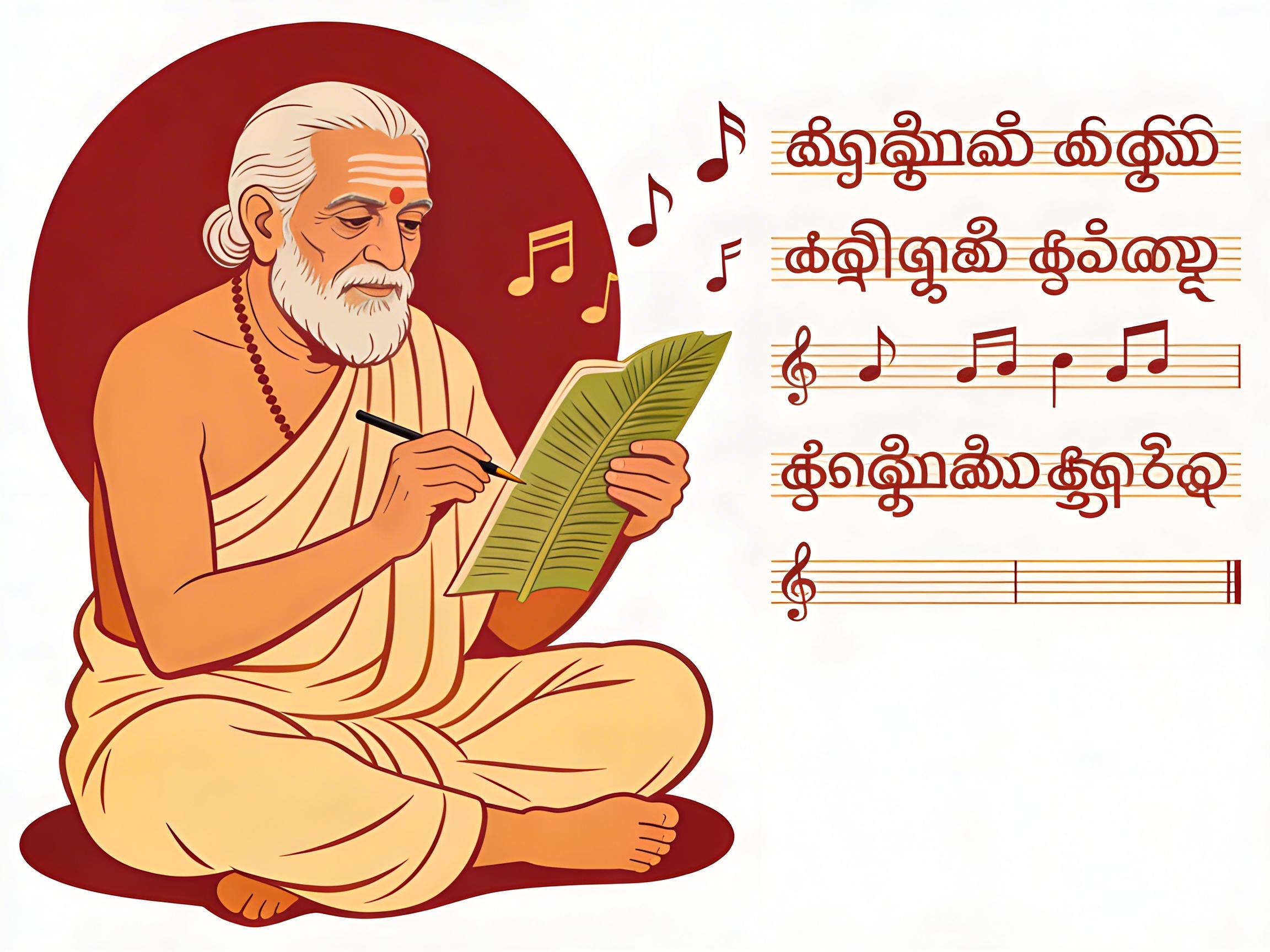
- Composed by Saint Arunagirinathar in the 15th century originally approximately 16,000 hymns, with around 1,300 surviving and actively sung today.
- Thiru means divine. Pugazh means glory. Every single verse is addressed directly to Lord Murugan, not about him.
- Set to intricate rhythmic meters called Chanda Talas, a system of metrical complexity unmatched anywhere else in Tamil literature, woven through with Carnatic musical ragas.
- The story behind the hymns is inseparable from the hymns themselves. Arunagirinathar was at the lowest point of his life when Murugan appeared and granted him grace. Every verse that followed is that experience, made permanent.
06
Kandhan Alamgaram
- One of the three celebrated devotional works of Arunagirinathar 108 verses of precise, devoted praise describing the infinite beauty and divine adornments of Lord Murugan.
- Alamgaram means adornment. This is the devotee's loving gaze upon every detail of the Lord's divine form, from the Vel in his hand to the peacock beneath his feet.
- Objective in nature unlike Kandhan Anuboodhi, which records inner experience, Alamgaram captures what the devotee sees when Murugan stands before them.
- It completes the Arunagirinathar triad alongside Thirupugazh and Kandhan Anuboodhi. Three works, three windows into the same Lord.
07
Kandhan Anuboodhi
- 51 verses, the most intimate writing Arunagirinathar ever produced. Anuboodhi means the direct experience of the divine. This is not theology. It is testimony.
- Called the crest jewel of Arunagirinathar's entire body of work. In these verses, Murugan appeared as the Guru and transmitted eternal truth directly into the saint's being.
- Where Kandhan Alamgaram is the outward gaze upon the Lord, Kandhan Anuboodhi is the inner meeting where the seeker dissolves into the sought, and the experience itself becomes scripture.
- Recited daily by devotees for clarity, for the removal of obstacles, and for deepening the personal relationship with Lord Murugan.
08
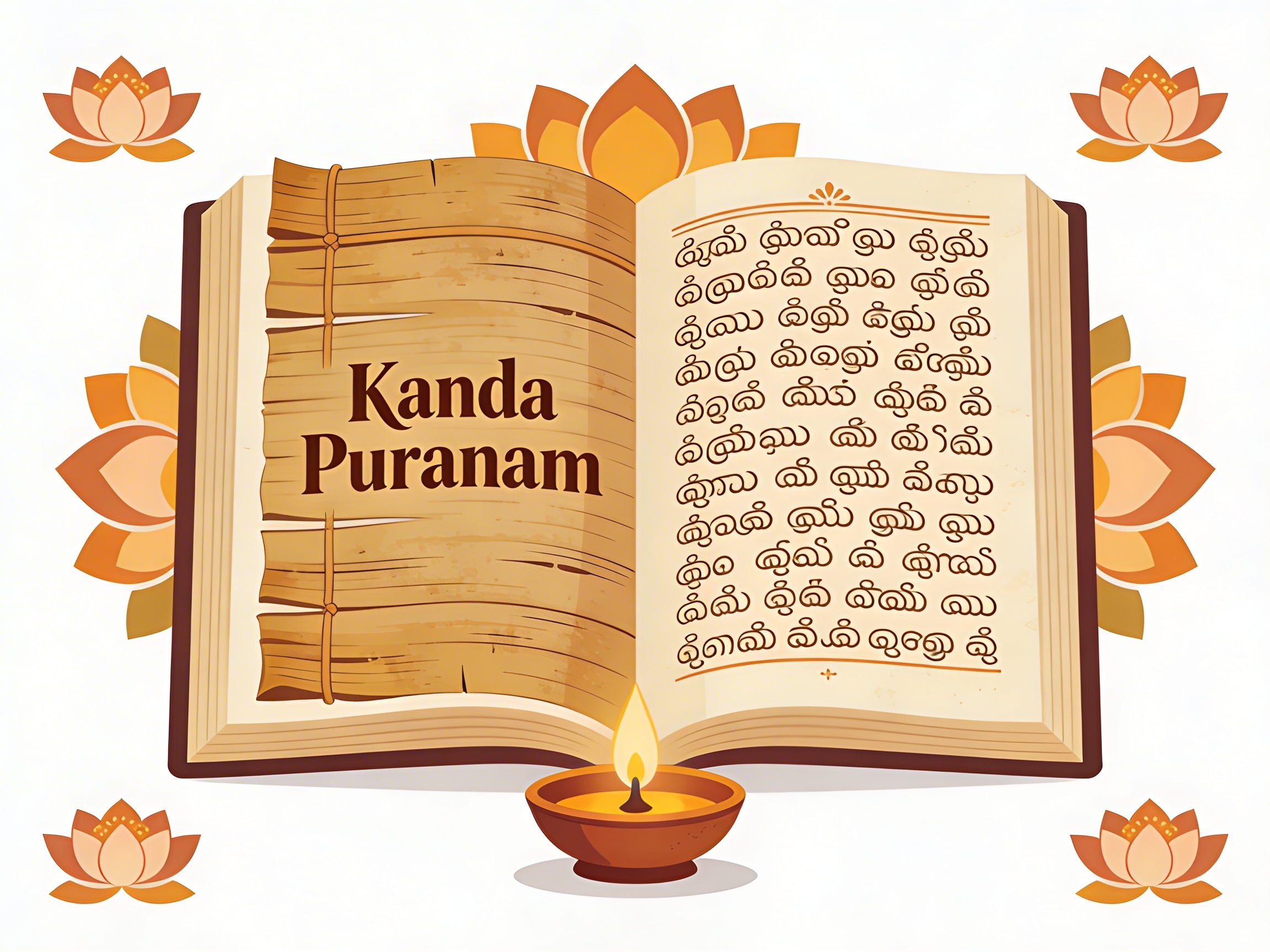
Kanda Puranam
- The Kanda Puranam is the complete Tamil biography of Lord Murugan containing 10,345 verses across six sacred cantos, it is Murugan's story told from his divine birth through the great cosmic war to his eternal grace.
- Composed by Kachiyappa Sivachariyar of Kanchipuram. According to tradition, Lord Murugan appeared in his dream, gave him the first verse, and personally guided the work until its completion.
- The six cantos are Utpatti Kandam (birth), Asura Kandam (the demons), Mahendra Kandam, Yuddha Kandam (the war), Deva Kandam, and Daksha Kandam together forming one of the most complete devotional epics in Tamil literature.
- Scholar Kamil Zvelebil observed that the Kanda Puranam carries within it almost step by step the structural elements of the oldest Tamil tradition. It is where Vedic Shaiva scripture and ancient Tamil devotion meet in a single text.
09
Thirupugazh All Languages
- Arunagirinathar's hymns are now available in Tamil, English, Hindi, Kannada, Malayalam, and Sanskrit, making them accessible to Murugan devotees in every part of the world.
- This global availability is largely the work of scholars and devotees, with Guruji A.S. Raghavan (1928 to 2013) playing a central role in systematically translating and teaching Thirupugazh far beyond Tamil Nadu.
- Whether you read Tamil script, use transliteration, or need meaning-by-meaning translation, each language version preserves the spiritual essence of the original.
- The Lord's glory does not belong to one language. This page exists so it reaches every devotee in theirs.
10
Bala Murugan Poombarai, Kodaikanal
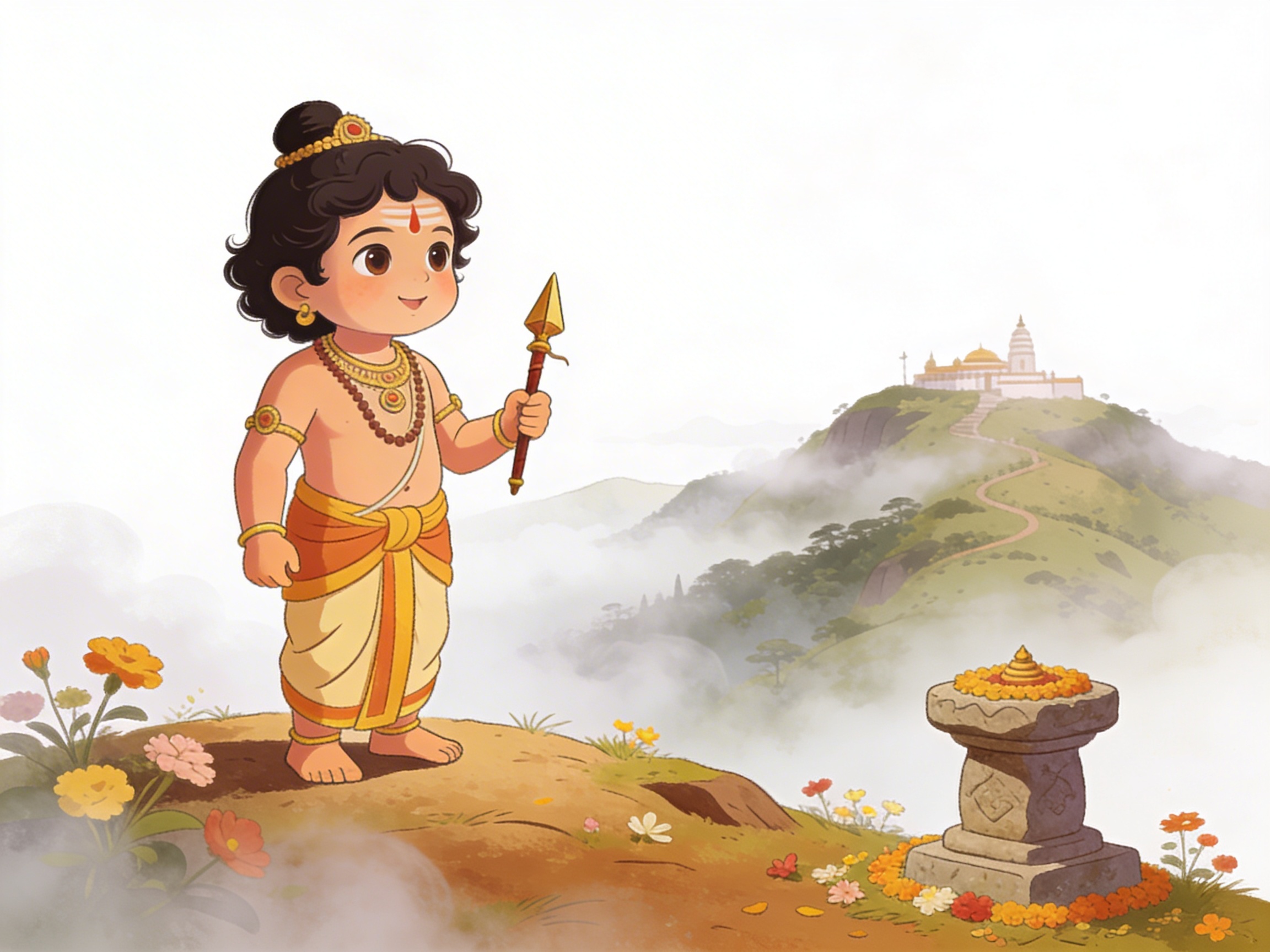
The Kuzhanthai Velappar Temple at Poombarai sits at 1,920 metres above sea level in the Palani Hills, 25 kilometres from Kodaikanal. It is among the rarest Murugan shrines in the world.
The presiding deity is Lord Murugan in his child form, Kuzhanthai Velappar, the child who wields the Vel. The legend traces back to Arunagirinathar. While journeying through these hills, he was threatened by a demon. Murugan appeared as a small child carrying the Vel and drove the demon away. Arunagirinathar composed the Poombarai Velan verse here on that very ground, and the form and the name have remained ever since.
What makes this temple singular is its presiding idol, crafted from Navapasanam, a sacred fusion of nine medicinal minerals, by the Siddha sage Bogar. This makes the Poombarai idol the second Navapasanam Murugan idol in the world. The first is the Palani Andavar.
The temple is believed to be over 3,000 years old, built during the Chera dynasty's rule over these hills. Sage Bogar's own shrine stands within the temple complex, connected, as devotees hold, by a hidden tunnel to a cave deep inside the hill, an unbroken thread in the Siddha tradition.
11
108 Names of Lord Murugan Ashtottaram
- The 108 names of Lord Murugan, Sri Subrahmanya Ashtottara Shatanamavali, are each a complete act of devotion. To chant them is to perform nama parayanam, the most direct and accessible form of worship in the Shaiva tradition.
- Each name reveals a specific truth about him. Skandaya, the unstoppable. Guhaya, the indwelling Lord. Devasenapati, commander of the celestial armies. Kripalave, the compassionate. Bhaktavatsala, the one who loves his devotees.
- The 108 names span both Sanskrit and Tamil traditions. They address both Kartikeya of the North and Murugan of the South, confirming that this one being transcends region, language, and time.
- Traditionally chanted on Skanda Sashti, Vaikasi Visakam, Karthigai days, and in daily puja. A complete recitation takes 10 to 12 minutes.